Instant · pay on the day
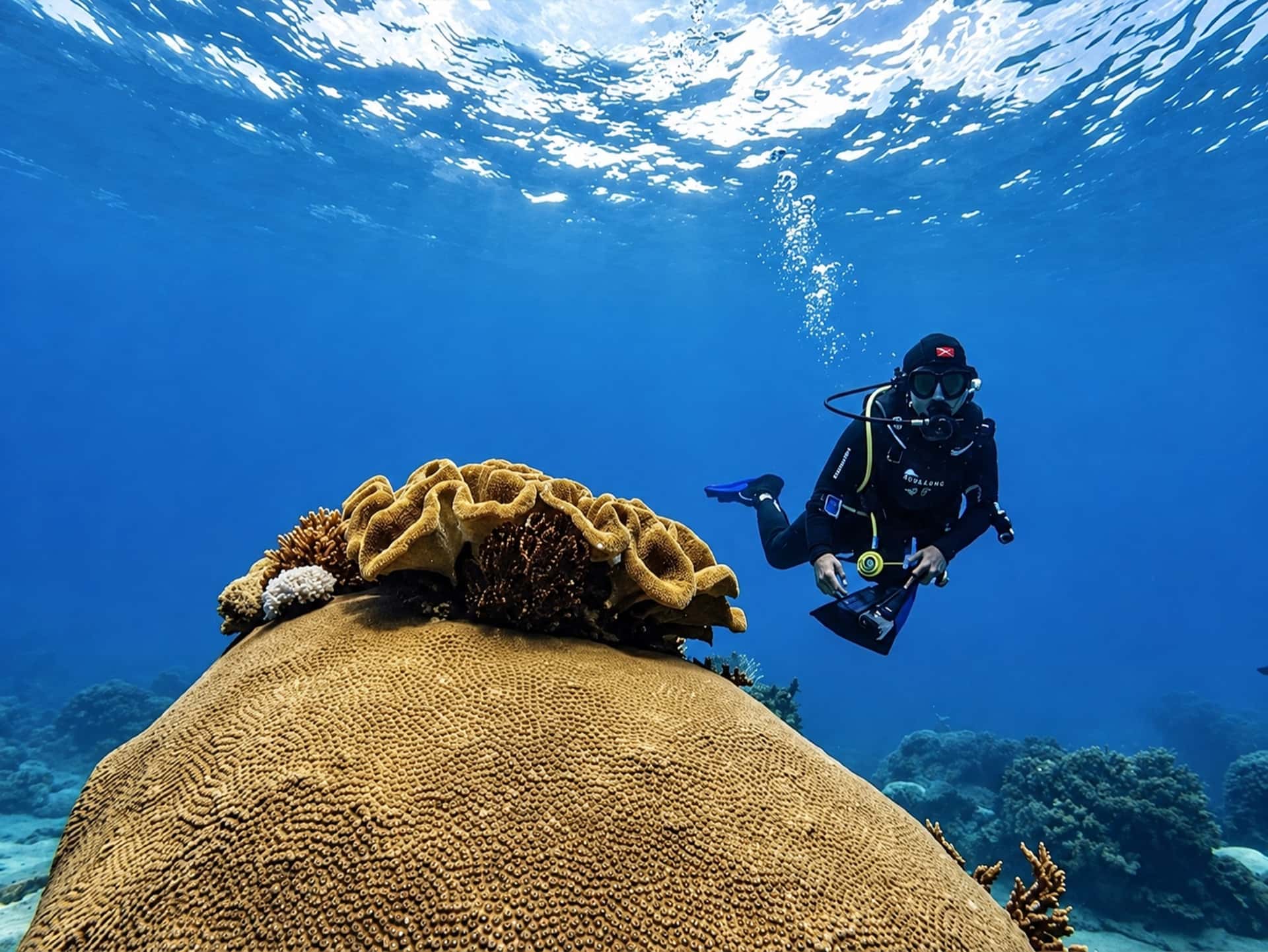
Dili Night Dive
DiliUp to 1 dayDreamers Dive Academy Timor
DivingModerateMax 4Pickup
Torch included
5.0(30 · Google)
$60per personMinimum 2 guests, from $120
Check dates & availability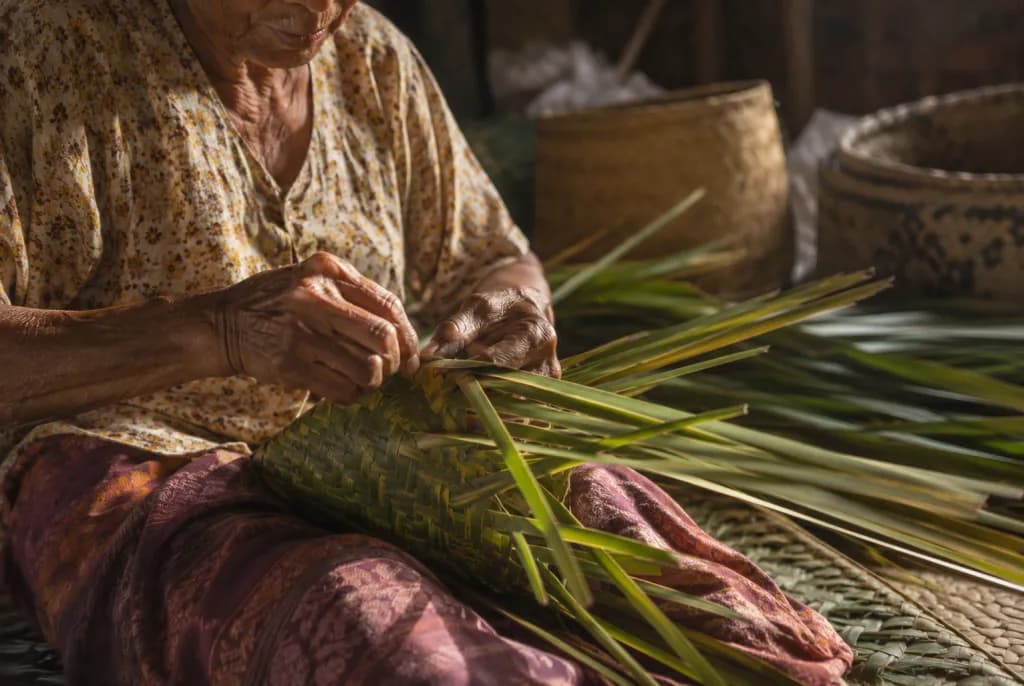
Tais weavings, carved spirits, and the objects that carry a nation's memory
Run your fingers across a piece of tais and you're touching something that has no equivalent in a souvenir shop. The cloth is dense and geometric, woven on a backstrap loom by a woman who learned the patterns from her mother, who learned from hers. The colors, deep indigo, rust red, cream, come from a specific village in a specific district. You can't fake the origin the way you can't fake the months of work.
Timor-Leste's craft traditions survived Portuguese colonisation, Indonesian occupation, and the burning of 1999. They survived because they were carried in hands and in memory, not in institutions. What you find in markets today, tais cloth, carved wooden figures, hand-thrown pottery, isn't folkcraft preserved for tourists. It's a living culture that happens to produce beautiful objects.
Buying well here matters. The difference between a piece bought from the weaver's cooperative and one picked up from a street vendor isn't just quality: it's whether the money reaches the person whose skill you're actually paying for. This guide tells you where to find authentic work, what to look for, and what these objects actually mean.
Tais is the most important material object in Timorese culture. Not simply textile: tais is currency, ceremony, and identity woven into one. It changes hands at weddings, funerals, peace agreements, and formal greetings between communities. The exchange of tais between families formalizes a marriage more completely than any document.
Each region produces a recognisably different cloth. Oecusse tais, from the enclave on the northwest coast, uses intricate diamond and chevron patterns in burgundy and gold. Lospalos tais from the far east tends toward finer weave and more complex multi-color banding. Suai and Maliana each have their own traditions. The more you look, the more you start to read the geography in the fabric.
The weaving process is slow. A single large tais, roughly 50cm by 2 metres, takes weeks of concentrated work on a traditional backstrap loom. The weaver sits on the ground, the loom tensioned against her body, picking threads with a wooden needle. There's no shortcut. Machine-made imitations exist, particularly imported from Indonesia, but they lack the slight irregularities that make authentic hand-weaving recognisable to anyone who takes a moment to look.
At Tais Market near the Dili waterfront, you can browse dozens of sellers and compare regional styles side by side. Prices range from around $5 for a small decorative piece to $60 or more for a large, densely worked cloth. The quality and weave density at the top end is genuinely exceptional. If you're buying one thing in Timor-Leste, let it be this.
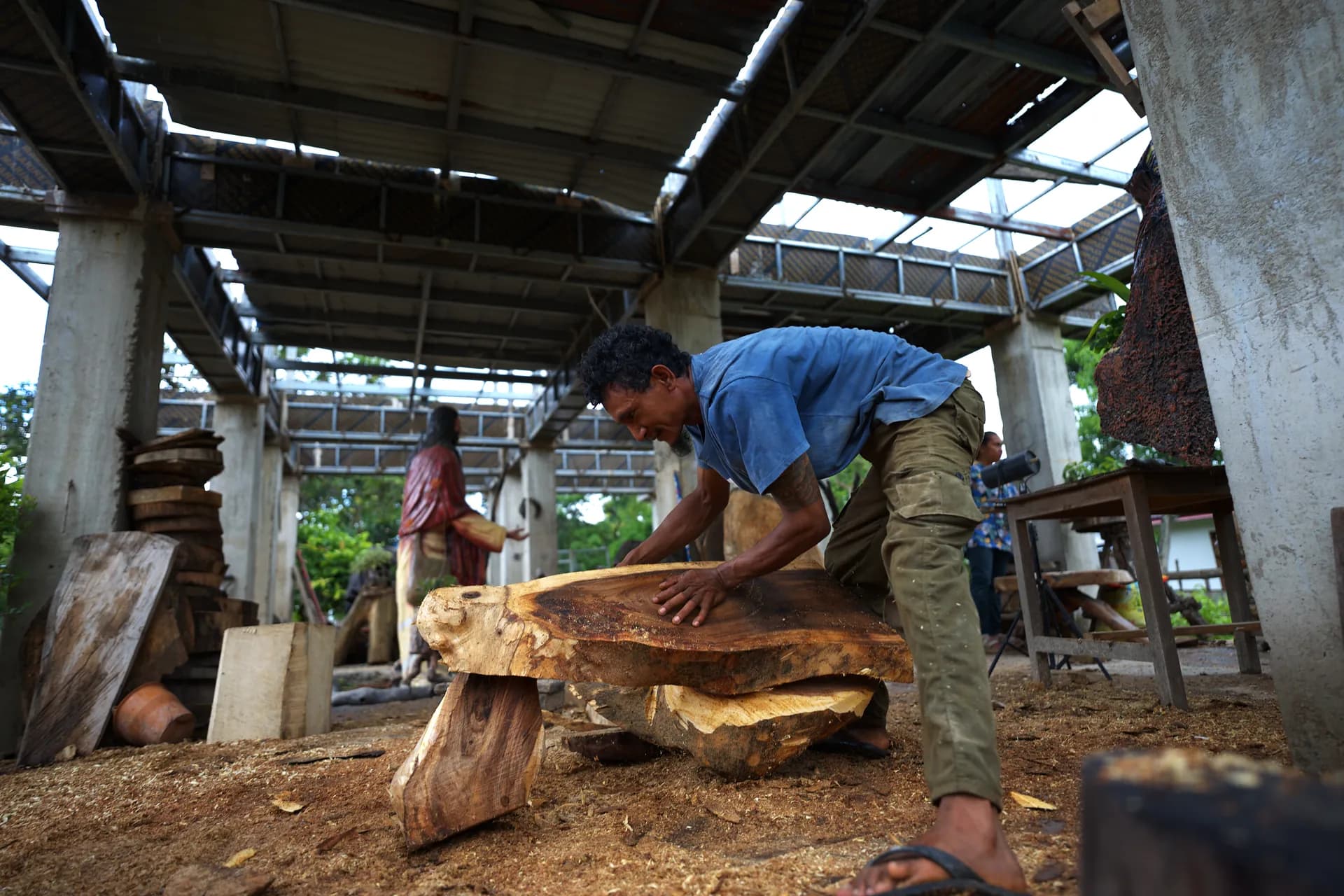
Timorese wood carving has two distinct strands. The everyday strand produces the objects you'll see in every market: small carved crocodiles (the national symbol, believed by many communities to be a sacred ancestor), human figures in traditional dress, and the kaibauk: a distinctive crescent headdress that appears in both ceremonial context and as a carved motif on everything from jewellery to official seals.
The deeper strand is sacred. Carved wooden objects, sometimes anthropomorphic figures, sometimes abstract forms, are central to lulik (sacred) practice and are kept inside uma lulik (sacred clan houses). These are not for sale, and you won't find them in shops. If you encounter them during a village visit, treat them with the same respect you'd give a religious relic.
The kris, a wavy-bladed ceremonial dagger with a carved wooden handle, is one of the most striking craft objects you can buy. Quality varies enormously. The best examples have handles carved from dense hardwood with fine detailing, and blades that are balanced and well-finished. Expect to pay $15-40 for a genuinely well-made piece. Cheaper versions exist, but the craft value isn't there.
In Dili, wooden crafts are sold at Tais Market and in a handful of souvenir shops along the waterfront. For higher-quality work, ask your guesthouse or guide whether any carvers are working locally: occasionally you can watch a craftsman at work and buy directly, which is a better experience all round.
Hand-thrown pottery exists in specific rural communities: it's not a widespread craft but it's worth seeking out if you're traveling to the districts. Pottery traditions are strongest in parts of Ermera and the interior, where women shape clay vessels by hand using techniques that predate any foreign contact. The forms are simple and functional: water vessels, cooking pots, fermentation jars. The surface texture is raw and honest in a way that high-fired ceramics aren't.
Basketry is more widely practiced and easier to find. Woven palm-leaf baskets, hats, and mats appear in markets across the country. The weave quality ranges from rough utility pieces to tight, intricate work that takes genuine skill to produce. A well-made Timorese basket is genuinely useful, it's not a tourist trinket, and they pack flat for travel.
Palm-leaf weaving is particularly associated with communities in Lospalos and the far east, where women weave during quieter periods of the farming calendar. If you're visiting the eastern districts, keep an eye out for baskets and mats laid out for sale near village entrances. Prices are modest, $2-8 for most pieces, and bargaining is gentle and not expected to be aggressive.
There's a small but genuine contemporary art scene in Dili, mostly operating through NGO-supported studios and cultural spaces. The work tends to process the recent past, the occupation, the resistance, the long rebuild, through painting, printmaking, and mixed media. It's not folk art and it's not decorative craft. It's artists using their specific history as raw material.
The Alola Foundation, established by Kirsty Sword Gusmão, has been one of the most consistent champions of Timorese crafts and has worked to connect weavers with markets and provide fair prices. Their Dili shop stocks tais and other craft items with verified provenance and fair compensation to producers. Buying here is one of the most straightforward ways to ensure your money reaches the right people.
The annual Timorese arts and culture festivals, particularly around Independence Day in May, showcase both traditional and contemporary work. If your timing allows, these events give a broader picture of what Timorese artists are producing across disciplines. Photography, performance, and installation have all grown alongside the traditional textile and carving crafts.
Tais Market in Dili is the obvious starting point. It sits near the waterfront, a row of stalls where sellers lay out their wares on tables and hang cloth from frames. It's not a picturesque bazaar: it's a functional, slightly chaotic market. But the range is excellent and you can compare dozens of pieces in one place. Arrive without hurry, handle the cloth, and ask where each piece is from. Sellers who know their stock will tell you.
The Alola Foundation shop is smaller but higher-curated. You pay a bit more, but the provenance is clearer and the margins go to the weaving cooperatives. Worth visiting before you go to Tais Market: it gives you a reference point for quality.
In the districts, buying from local cooperatives or directly from weavers is almost always possible and always preferable. If you're spending time in Oecusse, Baucau, or Lospalos, ask your accommodation host whether there's a weaving cooperative nearby. Many will offer to make an introduction. These are the transactions that matter most to the craftspeople involved.
One honest note on authenticity: machine-made tais exists and is sold alongside hand-woven pieces in some markets. The difference is visible if you look carefully: machine weave is perfectly regular; hand weave has subtle variation in thread tension and spacing. Run your thumb along the surface. Real backstrap-loom tais has a slightly uneven texture that catches your fingernail differently at different points. The fake is smooth and flat.
Torch included

Iconic shore sites: Cristo Rei, Tasi Tolu & Dili Rock

All-inclusive: gear, guide, transport & snacks
No experience needed
Dili · Oecusse

Year-round for markets and shopping. May (around Independence Day) and July bring festivals where traditional crafts are displayed and sold in cultural context. Wet season (December-April) has fewer tourists: you'll have more unhurried time with sellers and craftspeople.
New experiences, insider tips, and seasonal highlights. No spam, just useful stuff for planning your trip.
Unsubscribe anytime. We respect your inbox.
Continue planning your trip to Timor‑Leste

The complete guide to experiences, adventures, and hidden gems

Your complete guide to Timor-Leste's coastal capital
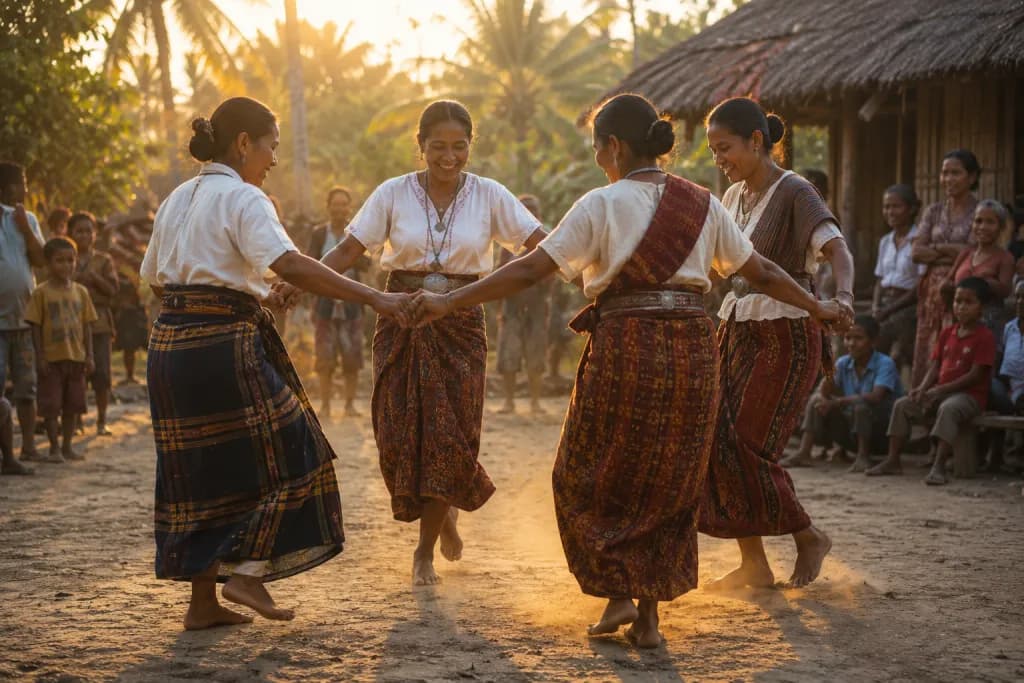
Religion, language, kinship, tais, music, and the customs that shape daily life
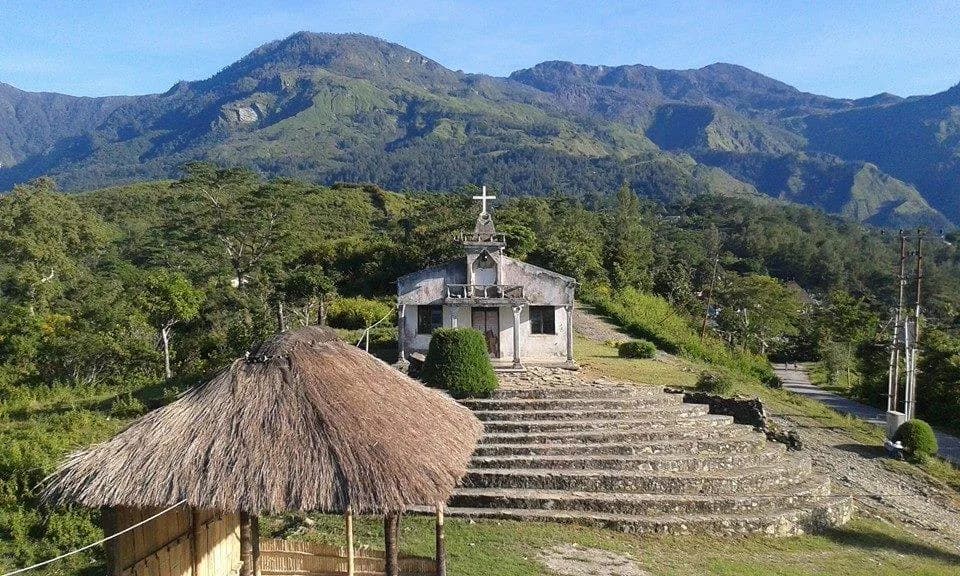
Independence celebrations, mountain pilgrimages, harvest ceremonies, and Saturday night markets
Places mentioned in this guide