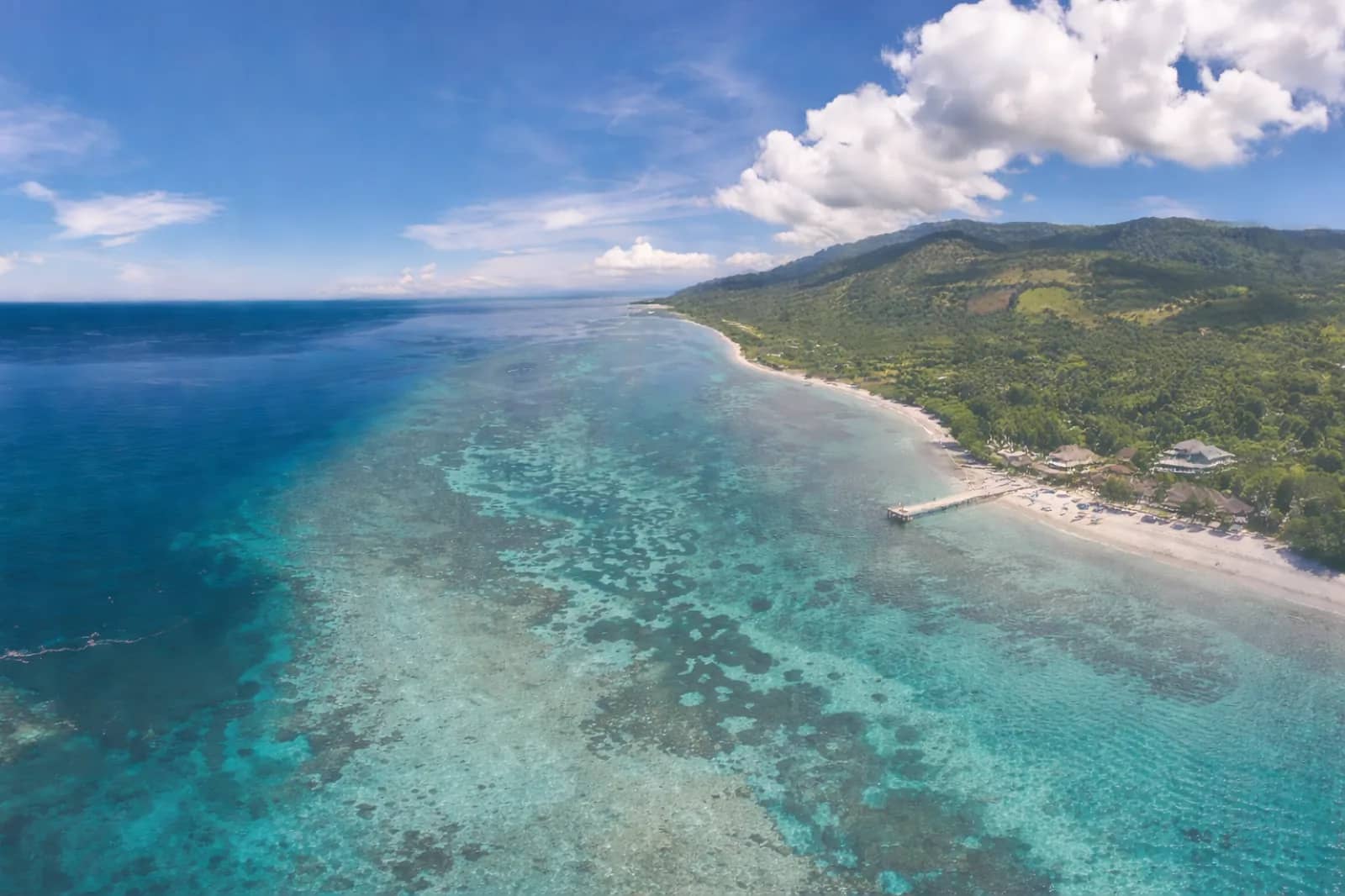
Atauro Island, Timor-Leste — pristine reefs and quiet beaches just 90 minutes from Bali
2026 Comparison · Updated Apr 2026

Timor-Leste vs Bali — honest 2026 comparison

Bali had 6.95 million international tourists in 2025. Timor-Leste had ~40,000. They're a 90-minute flight apart. Here's an honest read on which is right for your trip — or how to combine both.

Short answer

Bali for the experience you already know. Timor-Leste for the one you don't.

Bali is excellent at being Bali — yoga, surf, beach clubs, infinity pools, easy English, world-class restaurants. It's also dealing with serious overtourism (Fodor's ranked it #1 on its "No List" for 2025). Timor-Leste, the country directly east of Bali, has the world-record reef-fish biodiversity, almost no other tourists, and a deep, intact culture. Most travelers should not pick one. They should add 3–7 days of Timor-Leste to a Bali trip — the 90-minute flight makes it cheaper than a domestic Bali transfer.

The numbers, side by side

All 2025 data from official sources where available. Currency is USD.

Metric🇮🇩 Bali🇹🇱 Timor-Leste
International tourists (2025)
174× ratio. Bali gets more visitors in a single week than Timor-Leste gets in an entire year.
6.95 million~40,000
Population
4.4 million~1.4 million
Tourist density
~1.6 visitors per resident/year~0.03 visitors per resident/year
Mid-range daily cost
$100–150$70–120
Backpacker daily cost
$30–50$25–50
Flight time from each other
90 minutes

Best for…

They're different products. Both excellent at what they do.

Choose Bali for…

  • First-time Southeast Asia
  • Wellness, yoga, and digital-nomad cafes
  • Luxury resorts and infinity pools
  • Surfing on long, well-known breaks
  • Easy English everywhere
  • A bigger food and nightlife scene

Choose Timor-Leste for…

  • World-record reef diving (Atauro Island)
  • Travel without crowds — fewer than 10 tourists per day in the country
  • Adventure travel and remote highlands
  • Authentic, untouched local culture
  • Country-collectors and post-Bali travelers
  • A 3–7 day add-on from Bali itself

Crowds and atmosphere

Bali in 2025 hit 6.95 million international visitors — a 9.7% jump on 2024. With a resident population of about 4.4 million, that's roughly 1.6 visitors per resident every year. Areas like Canggu, Seminyak, and Ubud regularly hit traffic levels that travelers compare to rush hour in major Western cities. Bali's tourism industry consumes about 65% of the island's freshwater. Fodor's Travel ranked Bali #1 on its "No List" for 2025.

Timor-Leste, by comparison, gets fewer than 110 international tourists per day across the entire country. Outside Dili you can drive for hours and not see another foreign visitor. The country has only had a tourism industry for about 23 years — the calculus is utterly different. There are no touts at temples, no scooter-rental scams, no plastic apocalypse on the beaches.

Bali's upside is community and infrastructure: there's always somewhere open, always someone to meet, always a yoga class or surf lesson available. Timor-Leste's upside is the opposite — solitude, intimacy, and a country that hasn't been packaged yet.

Diving — where Timor-Leste actually wins

Bali has good diving. Tulamben's USS Liberty wreck is iconic. Nusa Penida has reliable manta encounters. The Amed shore reefs are easy and forgiving. Operator quality is high and prices reasonable ($45–80 per dive depending on location).

But Timor-Leste's Atauro Island is, by a documented scientific measure, the highest reef-fish biodiversity site ever recorded on Earth. A 2016 Conservation International expedition counted over 250 species at a single dive site — exceeding the previous record held by Raja Ampat. The Wetar Strait's deep nutrient upwellings feed an ecosystem where pygmy seahorses, blue-ringed octopuses, and reef sharks share the wall with whale sharks during certain months.

The honest caveats: Atauro doesn't have liveaboards on the scale of Raja Ampat (~1,700 fish species across the archipelago). It doesn't have the variety of dive sites of Komodo. But it has zero crowds. Daily boat dives from Dili or Atauro typically run with 2–4 divers — not 12–20. And visibility regularly exceeds 30 meters May–November.

For divers comparing the Coral Triangle:

  • Atauro: highest fish-per-site biodiversity, $45–60/dive, near-zero crowds
  • Raja Ampat: highest total biodiversity (~1,700 species), $80+/dive, expensive liveaboards required
  • Komodo: famous drift dives, $60–80/dive, increasingly busy
  • Bali: easy access + variety, $45–80/dive, popular sites get crowded

Cost — closer than you think

Backpackers in Bali typically spend $30–50/day. Mid-range travelers $100–150/day. Bali's average hotel rate sits around $59/night.

Timor-Leste runs comparable: $25–50/day for backpackers (homestays, mikrolets, local food), $70–120/day mid-range. The ceiling is much lower because there's no luxury resort infrastructure to drive prices up. The floor is similar to Bali because Timor-Leste runs on US dollars (no currency arbitrage), imports most goods, and has limited operator competition.

Where Timor-Leste consistently beats Bali on price: diving ($45–60 vs $50–80), hiking ($30–50 day tours vs Bali sunrise hikes for $40+), and food when you eat where locals eat ($1–3 per meal at warung-equivalents). Where Bali wins on price: package tours, scooter rental, mid-range hotels in non-tourist zones.

Getting from Bali to Timor-Leste

This is the headline reason most Bali travelers don't need to choose. The flight from Denpasar (DPS) to Dili (DIL) is 1 hour 52 minutes. Citilink (QG501) operates daily, and Aero Dili runs frequent service. One-way fares start around $200; return tickets from $350. Visa-on-arrival at Dili airport is $30 USD cash for a 30-day stay.

Compare that to other routes: Singapore → Dili is $500+ return. Darwin → Dili is $350+ return. Kuala Lumpur → Dili (Batik Air, since 2025) is around $400 return. Bali → Dili remains the cheapest, fastest, most-frequent gateway.

Practical sequence for a combined trip: arrive in Bali, do your Bali week, fly to Dili the morning of day 8, spend 3–7 days in Timor-Leste, fly back to Bali for the international connection home. Or fly direct Dili → Singapore at the end if your itinerary allows.

Culture — different worlds, both worth seeing

Bali is Hindu in a Muslim country. Its temples, ceremonies, and arts are unique within Indonesia — and tourism has both preserved and commercialized them. You can see authentic Balinese life if you know where to look (Sidemen, Munduk, Tirta Empul before the day-trippers arrive).

Timor-Leste is the only Portuguese-speaking country in Asia, the only majority-Catholic country in Southeast Asia, and one of the few places on Earth where animist traditions like the rebuilding of uma lulik (sacred houses) and the concept of lulik (spiritual potency embedded in landscape and ancestors) are openly part of daily life. Independence came in 2002 — everyone you meet over 25 lived through the Indonesian occupation. The history is recent, raw, and honest. You can't buy this in a tourism package.

The honest caveats for Timor-Leste

We're not selling you a paradise. Things to know:

  • Roads. 80%+ of roads are in poor condition. Outside Dili you want a 4WD or a driver. Distances that look short on a map can take 4 hours.
  • Power. Daily outages of 1–5 hours in Dili. Lodges and hotels have generators; everywhere else, plan accordingly.
  • Internet. The slowest in Southeast Asia. About 34% national penetration. 4G works in Dili and most coastal cities, patchy elsewhere.
  • Cash. No ATMs on Atauro Island. Bring USD cash from Dili.
  • Health. Limited hospital infrastructure. Travel insurance with medical evacuation is non-negotiable.
  • Dili first impression. Dili itself is dusty and chaotic. The country's best is outside the capital — give it 24 hours and head to Atauro or the highlands.

Quick decision framework

If you have 7 days or less and it's your first time in Asia → stay in Bali. Spend at least 2 days outside the south (try Sidemen or Munduk).

If you have 10+ days, want diving, and have done Bali before → split the trip. 5–6 days Bali, 4–5 days Timor-Leste with at least 2 nights on Atauro Island.

If you're a serious diver or country-collector → fly direct to Timor-Leste. Skip Bali this time. Use the Singapore or Darwin route.

If you're an expat already living in Bali → take a long weekend. 3-day Timor-Leste escape with everything arranged is what we built the Bali Escape package for.

Most popular combined trip

Already in Bali? Add 3 days of Timor-Leste from $350.

Flight, hotels, ferry to Atauro, a dive trip, transfers, SIM card — everything arranged. Land in Dili in the morning, dive Atauro the next day, back in Bali by the third evening.

Common questions

Is Timor-Leste cheaper than Bali?
Roughly the same for backpackers ($25–50/day) and slightly cheaper than Bali at the mid-range tier ($70–120/day vs $100–150/day in Bali). The big difference is what you're buying: in Bali you pay for crowds and infrastructure; in Timor-Leste you pay for solitude and operator costs. Diving in Atauro is $45–60 per dive vs $80+ in Raja Ampat or $80–120 in Komodo.
How do I get from Bali to Timor-Leste?
Direct flights from Denpasar (DPS) to Dili (DIL) take about 1 hour 52 minutes. Citilink operates a daily flight (QG501) and Aero Dili runs frequent service. One-way prices typically start around $200, return from $350. The flight from Bali is by far the most popular way into Timor-Leste — far cheaper and faster than coming from Singapore, Darwin, or Kuala Lumpur.
Is Atauro Island really better diving than Bali?
For reef-fish biodiversity per dive site, yes — significantly. A 2016 Conservation International study recorded the highest reef-fish species count ever measured per site around Atauro Island (over 250 species at a single site). Bali has good diving (Tulamben's USS Liberty wreck, Nusa Penida's mantas), but the reef pressure from tourism is much higher and the operator scene is crowded. Atauro's reefs are virtually empty by comparison. Raja Ampat still wins on overall species count (~1,700 fish species across the archipelago, including a 374-species single-dive record at Cape Kri), but Raja Ampat is harder and more expensive to reach. Atauro is closer, cheaper, and emptier.
Is it safe to visit Timor-Leste?
Yes. Crime is low, locals are warm and welcoming, and there's nothing like the petty-crime/scam ecosystem you'll meet in busier tourist destinations. The honest caveats are infrastructure (roads in poor condition, especially in the rainy season Dec–Apr), patchy mobile signal outside Dili, and limited medical facilities. Most travelers report Timor-Leste feels safer than Bali on a person-to-person level — there's no overtourism scam economy.
Can I do Bali and Timor-Leste in one trip?
Yes — and this is the trip we recommend most. Spend a week in Bali, then fly the 90 minutes to Dili and add a 3-day or 5-day Timor-Leste leg. Pure beach + reef diversity (Bali) plus pristine reefs and authentic culture (Timor-Leste). We've packaged this as a Bali Escape — flights, hotels, dives, transfers, and SIM card all arranged. See Bali Escape below.
When is the best time to visit Timor-Leste vs Bali?
Both share roughly the same dry/wet seasons. Dry season is May–November (best weather, dive visibility, and trekking). Wet season is December–April (rougher seas, occasional ferry cancellations to Atauro, but less crowded everywhere). For Timor-Leste specifically, October–December is whale and dolphin season in the Ombai Strait — a strong reason to time the trip then.
Why isn't Timor-Leste more popular yet?
Three reasons: (1) Limited flight access — only 5 airlines fly to Dili, mostly via Bali, Singapore, Darwin, and KL; (2) The country is young — independence in 2002 — so tourism infrastructure is still emerging; (3) Marketing budget is small. The flip side is that the window for "untouched Timor-Leste" is closing fast: ASEAN membership (2025), airport expansion (targeting 1M passengers by 2028), and new direct routes are about to open the country up. The best time to visit was yesterday; the second-best is now.